Friday, July 20, 2012

Protect Your Pets from Poisonous Plants

Plant Dangers for Pets

 Maintain the health of dogs and cats by making sure they stay away from these poisonous blossoms.
FlowersHealth Effects on Dogs and Cats
Azaleas and rhododendronsVomiting, diarrhea, leg paralysis, coma, heart failure
DayliliesKidney failure in cats
GeraniumsVomiting, depression, dermatitis
HydrangeasVomiting, depression, diarrhea
Source: American Society for the Prevention of Cruelty to Animals

When Food Scares Drive the Sales Pitch

A dubious milk scandal in Australia demonstrates how quickly marketers can seize upon public fears to serve corporate interests.
2639689186_56c7bd9cd5_bmain.jpgabardwell/Flickr
The exposé was incisive, frightening, and a bit self-righteous: "Much of the milk on our supermarket shelves have been modified with a secret ingredient the milk industry doesn't want us to know about." Aired by an Australian current affairs program in 2008, it aimed to educate consumers about permeate, a watery by-product of milk processing made up of lactose, vitamins, and minerals that critics say was used to water down milk.
Once the veil had been lifted, the public demanded better, and last month two major Australian milk brands, Dairy Farmers and Pura, declared that they are officially going "permeate-free."
Pura'saccompanying campaign reads like a dutiful response to the criticism, their elimination of permeate a move toward making superior products available to consumers. "Our milk is not diluted with permeate," the company proudly proclaims, "and therefore it's less processed and closer to how it is on the farm." It's a clear victory, in other words, for healthy, natural food.
But just as friendly Old MacDonald began to skip off into the sunset with his smiling dairy cows, Dr. Frank Sherkat, a milk and dairy expert at RMIT University in Melbourne, showed up, cattle prod in hand, with a well-reasoned plea for common sense. Pura's new marketing strategy, so his accusation goes, is no more than a gimmick that plays off public fears. Permeate, he says, is simply used to standardize protein and fat proportions, far from what the campaign would have you imagine is some kind of modern additive corrupting otherwise wholesome milk. Pura itself acknowledges, albeit quietly, that the truth is nowhere near as dire. Its website asks, "Is permeate bad?" and then answers its own question: "No."
The whole non-affair is reminiscent of the sudden outcry over "pink slime," which earlier this year went from being a standard, if largely unrecognized, hamburger filler to being an egregious effort of the meat industry to pull one over on consumers. As a vegetarian who already has a beef with the meat industry (pardon the pun), I wasn't too shocked to learn about what is officially called "lean finely textured beef," but in truth, the news wasn't as scandalous as it appeared. The U.S.D.A., along with other food industry experts, insists that LFTB is safe and healthy. Safeway, to give just one example among many, got rid of pink slime anyway, acknowledging the fact that it was a non-issue -- yet boasting, in the statement it released, that the supermarket chain "is committed to providing our customers with the highest-quality products."
As so much of the food production industry is shrouded in mystery, it's easy to have doubts about what we're "really" consuming, making us especially susceptible to marketers' doublespeak. Decoding their health claims and boasts, as a result, becomes yet another challenge for consumers. Take, for example, the allure of chicken that's labeled "hormone free." Sounds great, but the producers aren't doing us any favors. They're just obeying the law: according to official USDA regulations, that claim can only be made if directly followed by the statement, "Federal regulations prohibit the use of hormones in poultry."
High fructose corn syrup is another term likely to cause a visceral, negative reaction in consumers. And while the sweet stuff certainly isn't good for you, a study in the American Journal of Clinical Nutrition concludes that it "has the same sugars composition as other 'benign' fructose-glucose sweeteners such as sucrose [also known as ordinary table sugar], honey, and fruit juice concentrates and dietary sources such as fruits and juices." Thus, claims that foods and beverages are healthier or more natural because they're sweetened with "real sugar" are bogus. It's worth noting as well that the Food and Drug Administration declared, in 2008, that the presence of high fructose corn syrup does not automatically disqualify a product from being able to declare itself 'natural.' As of yet, in fact, the F.D.A. hasn't been able to define the term at all.
Keep this all in mind as the F.D.A.'s new ban on BPA in baby bottles and plastic cups goes into effect. We know that BPA is best avoided, but products absent the industrial chemical may still contain -- and emit -- chemicals with estrogenic activity, or EA. The results of a study published in the journal Environmental Health Perspectives put it simply: "Almost all commercially available plastic products we sampled -- independent of the type of resin, product, or retail source -- leached chemicals having reliably detectable EA, including those advertised as BPA-free. In some cases, BPA-free products released chemicals having more EA than did BPA-containing products."
Still feeling reassured?

Lindsay Abrams
Lindsay Abrams - Lindsay Abrams writes for and produces The Atlantic's Health channel. Her work has appeared in The New York Times.

Things You Didn’t Know You Could Recycle

  by Amity Hook-Sopko
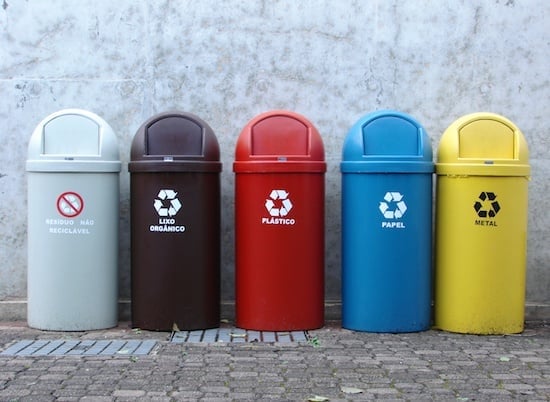
Even in today’s increasingly eco-friendly society, many still think recyclable items are limited to plastic bottles or paper products. In reality, local and national organizations are on their way to collecting almost anything that usually ends up in the trash. Here are a few unexpected items that can be part of your home’s recycling routine.
  • If your kids are tired of drawing with old crayons, don’t throw them out: give them new life by sending them to the Crayon Recycle Program at www.crazycrayons.com. This national initiative will collect the crayons and turn them into Crazy Crayons – old crayons melted into fun shapes and swirled colors – which you can then order for your kids to enjoy!
  • Join the Jewelry Brigade at TerraCycle! Send in your old or broken jewelry for free and get a fair price from a trusted source while donating an additional percentage to a charity or local school.
  • TerraCycle offers other unusual free collection programs. Mail in your worn-out flip flops to receive an exclusive coupon for an in-store purchase at Old Navy. Thanks to partner Logitech, you can also mail in old keyboards, webcams and mice, and earn money for your favorite charity by participating. Electronics and office supply stores also accept a variety of equipment to recycle, including computers and mobile phones, so don’t forget to check locally, as well. Visit www.terracycle.com to get more information on any of its collection programs.
  • Re-doing your floors? The Carpet America Recovery Effort (CARE) provides solutions for recycling carpet. Visit www.carpetrecovery.org for more information, and click the “Waste Diversion” tab to view a list of CARE’s carpet reclamation partners. There are many options for home or business owners, including drop-off locations and pick-up services.
  • Find your nearest Habitat for Humanity ReStore by visiting www.habitat.org/restores to donate building materials, furniture or appliances. The ReStores will sell the used items, and the proceeds fund local Habitat construction.
  • Check out www.Earth911.com to discover recycling opportunities in your local area. Just type in what you want to recycle and your zip code, and Earth 911 provides a list of drop off locations or mail-in opportunities.
Participating in collection programs like these not only help the environment but also give you the opportunity to clean out your home; make some money for yourself, charities or schools; give back to those in need; and teach your children that recycling can be easy and fun!

Lauren TaylorAs Director of U.S. Public Relations for TerraCycle, Inc., the world’s leading upcycling and recycling company, Lauren Taylor helps manage various public relations programs and campaigns of TerraCycle and its brand partners.
TerraCycle converts difficult-to-recycle packaging and products into eco-friendly, affordable items available at major retailers. When not at work, Lauren encourages her husband and stepsons to protect the planet and tries to make her household environmentally friendly through composting, recycling and buying local.

Eight Ways to Ease into a Natural Home


This post was written by Desiring Virtue’s monthly contributor, Katie Drumm.

It seems to me that there is a lot of confusion and misinformation when it comes to household cleaners. Today I would like to share some facts that may turn you off from traditional cleaners, but also provide you with some wonderful, natural cleaning alternatives. The best part is that most of the things I use to clean my home I own anyway for cooking or first aid, so they are not only healthy, but frugal options!
Living naturally can be a bit overwhelming, so I’ve broken down the way I clean my home and listed 8 easy ways that you can ease into your own natural home.

1. Learn about the products you’re currently using.

First, before you scoff and decide that you’d rather just bleach your home to death, take a moment to think about what you’re exposing yourself and your family to. For example, OSHA (Occupational Safety and Health Association) requires employers to provide their employees who handle bleach with gloves and safety masks. Yet we’re encouraged to clean our child’s toys by submerging them in a bowl of bleach. WHAT!?!?! The more I learn about the harsh, horrible chemicals found in the normal, everyday, popular cleaning supplies that most of us have in our homes the more and more frustrated I get with these companies!

Some More Things to Know:

  • There is no federal administration to regulate the safety of household cleaners. There’s no FDA for cleaning products! This means that manufacturers can pretty much put whatever they want in their cleaners–whatever gets the job done the cheapest. And they do.
  • Manufacturers of cleaning supplies do not have to tell consumers (or anybody else, for that matter) what is in their cleaners–they’re protected by trademarks and copyrights.
  • The Sanitation Department will not take your full containers of cleaners because they have classified them as hazardous materials.
  • Bleach irritates eyes, skin, and the respiratory tract just from inhalation.
  • When bleach is mixed with other cleaning agents, a poisonous gas is released that can cause bloody noses, neurological disorders, headaches and even death.
  • Household bleach, whether it’s mixed with other agents or not, can cause pulmonary edema, vomiting, or coma if ingested.
  • Chlorine, used in many household cleaners, was among the first chemicals used in chemical warfare during WWI.
There are many more things I could say about the dangers of bleach, chloride, lye, etc., but the point is simple: they are not safe. We have been told to rinse baby toys in bleach, to wipe our floors, kitchen counters, and bathtubs with bleach, to wash our whites with bleach, and our coloreds with color-safe bleach (whatever THAT really is), however, it simply isn’t safe. If scientists are required to practically put haz-mat suits on to handle these chemicals, why are we scrubbing our homes down with this stuff!?
If you are one of those ladies who just loves the smell of bleach, if that smell equals clean in your mind, can I encourage you to re-train your thinking? Remind yourself that that wonderful-bleachy-clean smell carries very real risks to your family.
I used to bleach my tile floors, my entire bathroom, and our white clothing. When I discovered the truth about household cleaners it was devastating: 1) that I was going to have to figure something else out, and 2) that I had been unintentionally hurting my family for so long!
Well, never fear: it’s not your fault that you didn’t know the dangers behind what you were using and you’re about to learn about natural cleaners you can use to replace the nasty chemicals! (and it’s going to be SO MUCH CHEAPER, TOO!)

2. Get rid of the toxic stuff.

To be clear, that’s probably most of what you own. It was for me, anyway. Anything with bleach, chlorine, or lye is no good. If you’re feeling really crazy you can get rid of anything with any chemicals in it, which really will be all of it.

3. Fall in love with Vinegar.

I use a simple vinegar spray as my general household/anti-bacterial cleaner and my tile/linoleum/hardwood floor cleaner. I am in love with vinegar and have re-trained my nose to smell vinegar and think, “Clean!” (instead of bleach).
Four tablespoons of white vinegar to 3 cups of water in a spray bottle will take care of most of your cleaning needs. I have yet to find something on my counters or floors that vinegar couldn’t get up. I love it!
As a floor cleaner, I use the O-Cedar ProMist Microfiber Spray Mop. It allows you to use whichever cleaning solution you’d like and comes with a washable, reusable pad. I fill it up with my vinegar solution and it works perfectly! It doesn’t make the floor sticky and it dries really fast.

4. Embrace Hydrogen Peroxide.

For those really rough stains, Hydrogen peroxide always does the trick. I use it to clean my windows, mirrors, toilet, and bathtub. You can buy a bottle of hydrogen peroxide in the first aid section of your drug or grocery store. Replace the cap with a spray bottle head so you can use it as a spray. Keep the liquid in the dark bottle, though, so it keeps its effectiveness.
The first time you use it on your windows or mirrors you’re going to think, “Oh, no! This isn’t going to work!” Because it’s natural and doesn’t have a ton of chemicals, it doesn’t wipe off as perfectly as you might hope. No worries–give it 30 seconds and your windows or mirrors will be streak-free and sparkling!

5. Make Baking Soda your best friend.

Baking soda is basically good for everything. I store it in an aluminum salt/pepper shaker and use it to help the hydrogen peroxide on my toilet and tub.
If the scum is really bad and hydrogen peroxide just isn’t cutting it, after cleaning initially with hydrogen peroxide, I sprinkle some baking soda in the toilet bowl, let it sit for a moment, and then scrub with my toilet brush.
In the shower, after spraying with hydrogen peroxide, I sprinkle baking soda, leave for a few moments, and then scrub with a Scotch Brite Scour Pad.
Since I started using natural cleaning supplies, I’ve never had to use anything stronger than hydrogen peroxide and baking soda on my toilet or bathtub.

6. Keep a bottle of Rubbing Alcohol handy.

This discovery has changed the way I feel about my carpets. I really don’t like spots on my carpet, and so I was really excited when a friend suggested trying rubbing alcohol. It works!!! (even on pet stains!) Simply pour enough alcohol right out of the bottle to cover the stain and rub it into the carpet. It dries quickly as you’re rubbing and the stain just sort of disappears!

7. Get fruity with your Dusting

I am not a fan of dusting. That’s why I was so excited when I came across this dusting/polishing recipe. It really shines up my wood furniture and (although I think I might be making this up—>) it seems to keep it dust-free for longer.
One cup olive oil & 1/2 cup lemon juice. I keep mine in a glass cruet with a spout and a stopper. Before applying to wood, with the stopper in place, I lightly shake the jar so that the oil and lemon juice mix as much as possible. Then I pour out a tiny amount onto an old rag and wipe down the furniture. A very small amount will go a very long way! Then you’ll want to wipe the furniture down with a part of the rag that you didn’t pour the mixture onto to try and pick up excess oil. This works great and keeps my furniture looking beautiful for quite a while. Also, it smells wonderfully clean!

8. Finally get your Stainless Steel Appliances sparkling!

I’ve never found a commercial cleaner that worked better than olive oil at cleaning my stainless steel appliances. Simply use with a soft cloth for getting smudges off your appliances!
And that’s it! That’s everything that I use to clean my home. Actually, switching to natural cleaning products is so easy, that this isn’t so much “Easing into” a Natural Home–this is “Easily Plunging into a Natural Home!”
I love using natural products because I don’t want to put my (or my family’s) health in jeopardy and I LOVE how these natural products really keep my home clean. Also, since I use almost all of these items for cooking, I save a ton of money each month NOT having to buy separate cleaning products!

Natural Cleaning Solutions I Use:

  • Vinegar Spray: 4 tsp. vinegar & 3 cups water in a spray bottle
  • Hydrogen peroxide: original bottle with a spray bottle nozzle
  • Baking soda: in an aluminum salt or pepper shaker
  • Rubbing Alcohol: kept in the bottle it comes in
  • Olive Oil & Lemon Juice polish: 1 cup olive oil & 1/2 cup lemon juice in a glass cruet with a spout & stopper
  • Olive Oil: Just kept in the jar it comes in (stored in my pantry)

Fresh Strawberry Kefir Scones with Orange Glaze

Post image for Fresh Strawberry Kefir Scones with Orange Glaze

makes 32 mini scones

Ingredients

For the Scones
4 cups plus 2 tablespoons all-purpose flour
2 cups old-fashion oatmeal
2/3 cup granulated sugar
2 teaspoons ground cinnamon
2 teaspoons baking powder
1/2 teaspoon baking soda
1 teaspoon salt
1 cup Plain or Vanilla Kefir
2 large eggs
2 sticks (16 tablespoons) frozen butter
1 1/2 cups diced fresh strawberries
For the Glaze
1 1/2 cups powdered sugar
4 tablespoons fresh orange juice

Directions

Preheat the oven to 400F. Line two baking trays with parchment paper.
For the Scones
In a large bowl, combine flour, oatmeal, sugar, cinnamon, baking powder, baking soda, and salt. Use a whisk to fully combine and aerate ingredients. Set aside.
In a small bowl, whisk together eggs and kefir, making sure egg yolks are completely broken and combined with other ingredients. Set aside.
Using a box grater, grate frozen butter completely and add to the flour mixture. Using your hands, distribute the butter through the mix.
Add the kefir mixture to the dry ingredients and butter. You can use a rubber spatula or wooden spoon to combine, but I find after the initial mixing in, it is easier to use my hands.
When there is no more spare flour at the bottom of the bowl and the entire dough mixture seems moistened and fully mixed, add the strawberries and mix again, making sure the strawberries are well distributed throughout the dough.
Mold the dough so that it is one large ball. Using your hand as a guide, divide the dough into 4 equal parts.
Flour a flat surface, then take one quadrant of the dough and drop it onto the flour. Flip it over so that both sides are well floured. Flatten and turn, patting so that the dough makes a disk about an inch in thickness. Using a butter knife dipped in flour, cut the disk into 8 triangles. Place each triangle on the baking sheet.
Repeat this process until all four quadrants of dough have been turned into mini-triangle scones. I was able to put approximately 16 scones on each baking sheet.
Bake each tray for 15-18 minutes. The scones should be golden brown. Allow to completely cool.
For the Glaze
In a small bowl, place 1 1/2 cups of powdered sugar. Add 4 tablespoons of orange juice directly to the powdered sugar, then stir repeatedly until the two ingredients are completely combined to form a thick glaze, roughly the consistency of kid’s craft glue.
On completely cooled scones, use a pastry brush to brush glaze directly on to each scone liberally. Alternatively, pour the glaze into a ziptop bag. Remove all the air and seal, then cut a tiny hole into the corner of the bag.
Using a zigzag pattern, pour the glaze over the scones.
Allow to set overnight. In the morning, the scones will have a slightly crunchy exterior, like the glazed scones at your favorite coffee shop.

Make Your Own Febreze Fabric Spray


Ingredients
  • 1/8 Cup of Febreze Fabric Softener
  • 4 TBSP of Baking Soda
  • HOT Water (Not Boiling)
  • Spray Bottle
Instructions
  1. Add Fabric Softener and Baking Soda to Spray Bottle
  2. Pour Hot Water int container to fill & Shake to break up fabric softener
  3. Shake before using, Spray on Fabrics and Furniture Items to remove odors

Butterfinger Caramel Bars

Photobucket

Ingredients
  • 6 1/2 graham crackers
  • 2 cups mini marshmallows
  • 1 (11 oz) bag Caramel bits
  • 2 Tbsp milk
  • 1 (10 oz bag Butterfinger Bites, coarsely chopped
  • 2 oz semi-sweet chocolate (for drizzle)
How to Make
  1. Line a 9x9 baking pan with foil, allowing foil to hang over the edge for easy removal.
  2. Spray foil with cooking spray.
  3. Place graham crackers on bottom of the pan, breaking to evenly fit.
  4. Sprinkle marshmallows evenly over graham crackers.
  5. Melt caramel and milk together in a microwave safe bowl for 1 minute. Stir and continue heating in 30 second intervals until melted.
  6. Pour caramel over the marshmallows and gently spread until evenly coated. The marshmallows will melt slightly, which is fine. Make sure to coat evenly so the caramel sticks to the graham crackers.
  7. Sprinkle chopped Butterfinger on top and and press the candies into the caramel/marshmallow mix.
  8. Melt semi-sweet chocolate in a microwave safe bowl on high power in 30 second intervals until melted.
  9. Drizzle semi-sweet chocolate on top of Butterfinger.
  10. Chill in refrigerator for 1 hour or until set.
  11. Cut into bars when ready to serve.
Notes
Store and serve bars at room temperature in an airtight container for up to a week. recipe adapted from Kraft