Sunday, July 22, 2012

BBQ Baked Beans and Sausage


Turn baked beans into an easy main dish by adding chicken sausage and collard greens. Check the sodium amount on your canned beans to make sure it's not too high. Giving the beans a good rinse before adding them to the recipe can shed up to 35 percent of sodium.


Total Time: 30 min

Ingredients
  • 1/2 cup(s) prepared barbecue sauce (see Tips & Techniques)
  • 1/2 cup(s) water
  • 2 tablespoon(s) tomato paste
  • 1 tablespoon(s) molasses
  • 1/8 teaspoon(s) salt
  • Freshly ground pepper, to taste
  • 1 tablespoon(s) canola oil
  • 1 medium onion, chopped
  • 4 cup(s) chopped collard greens, (about 10 ounces), tough stems removed
  • 9 ounce(s) cooked chicken sausage links (about 3 links), halved lengthwise and sliced
  • 2 can(s) great northern or navy beans, rinsed (see Tips & Techniques)

Directions
  1. Whisk barbecue sauce, water, tomato paste, molasses, salt, and pepper in a medium bowl.
  2. Heat oil in a large saucepan over medium heat. Add onion and collard greens and cook, stirring occasionally, until the collards are wilted, 3 to 5 minutes. Add sausage and cook, stirring, until beginning to brown, about 3 minutes more.
  3. Reduce heat to medium-low; add beans and the sauce mixture to the pan. Gently stir to combine, cover and cook until heated through, about 3 minutes.

Tips & Techniques
Shopping tip: Check the sodium of your favorite barbecue sauce-some can be quite high. This recipe was developed with a sauce containing 240 mg sodium per 2-tablespoon serving.

Note: While we love the convenience of canned beans, they tend to be high in sodium. Give them a good rinse before adding to a recipe to rid them of some of their sodium (up to 35 percent) or opt for low-sodium or no-salt-added varieties. (These recipes are analyzed with rinsed, regular canned beans.) Or, if you have the time, cook your own beans from scratch.

Five-Spice Turkey and Lettuce Wraps

five-spice-turkey-lettuce-wrapsBased on a popular Chinese dish, these fun wraps also make appealing appetizers for entertaining. Make it a meal: Serve with chile-garlic sauce and rice vinegar for extra zip; toss diced mango and strawberries with lime juice for a quick dessert.


Ingredients
  • 1/2 cup(s) water
  • 1/2 cup(s) instant brown rice
  • 2 teaspoon(s) sesame oil
  • 1 pound(s) 93%-lean ground turkey
  • 1 tablespoon(s) minced fresh ginger
  • 1 large red bell pepper, finely diced
  • 1 cup(s) water chestnuts, rinsed and chopped
  • 1/2 cup(s) reduced-sodium chicken broth
  • 2 tablespoon(s) hoisin sauce
  • 1 teaspoon(s) five-spice powder
  • 1/2 teaspoon(s) salt
  • 2 head(s) Boston lettuce, leaves separated
  • 1/2 cup(s) chopped fresh herbs, such as cilantro, basil, mint and/or chives
  • 1 large carrot, shredded

Directions
  1. Bring water to a boil in a small saucepan. Add rice; reduce heat to low, cover and cook for 5 minutes. Remove from the heat.
  2. Meanwhile, heat oil in a large nonstick pan over medium-high heat. Add turkey and ginger; cook, crumbling with a wooden spoon, until the turkey is cooked through, about 6 minutes. Stir in the cooked rice, bell pepper, water chestnuts, broth, hoisin sauce, five-spice powder and salt; cook until heated through, about 1 minute.
  3. To serve, spoon portions of the turkey mixture into lettuce leaves, top with herbs and carrot and roll into wraps.

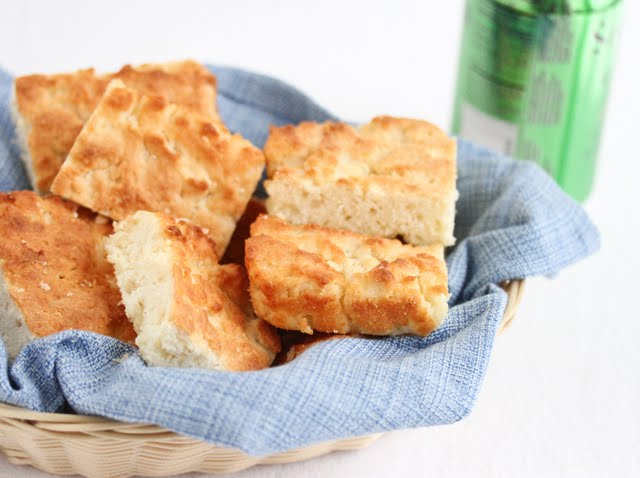
7-Up Biscuits


7-Up Biscuits

Ingredients:

2 cups Bisquick
1/2 cup sour cream
1/2 cup 7-up (or other similar soda beverage. I used ginger ale)
1/4 cup melted butter

Directions:

1. Preheat oven to 450F. Prepare a 9 x 9 baking pan. If you want taller and bigger biscuits, use a 9 x 5 loaf pan instead or double the recipe ingredients.
2. Mix Bisquick, sour cream and 7-Up in a large bowl. Melt butter and pour into the baking pan. Press dough into pan, spreading evenly across. For a 9 x 9 pan, it will barely spread across.
3. Bake for approximately 15 minutes until golden brown. If you use a smaller pan, it will take longer, approximately 20-25 minutes.

Saturday, July 21, 2012

What to Look for When Picking Fruits and Vegetables


Darya Pino, Ph.D

Most people know instinctively to avoid bruised or blemished produce, but there is much more involved in the art of choosing fruits and vegetables.
While buying fresh food is always a little bit of a crap-shoot (and not every rule will apply to every piece of produce), these tips will give you the basic skills you need to hold your own at the farmers market.
What To Look For When Picking Produce
1. Bright color
After you've checked for bruises, blemishes and pests (harder to see on vegetables like cauliflower and cabbage, so double check), look for fruits and vegetables with the brightest, most inviting colors. The tastiest, vine-ripened produce should be vibrant, with its skin entirely saturated with color. If the item has a dull color or whitish sheen, that means it is either not fully ripe or was deprived of sun or nutrients.
For fruits like cherries, look for stems that are green instead of brown, since these fruits will be fresher.
2. Heavy weight
Generally you want to pick produce that is the heaviest relative to the rest of your options. Lightweight produce is more likely to be dry and mealy, but heavier produce will be juicy and crisp.
The best way to tell is to pick up two similarly-sized fruits, one with each hand. After you've tried a few, it will be obvious that certain fruits are much heavier than the rest, and those are your best bets. This applies to both fruits and vegetables, but mostly to fruits.
3. Firm, but not hard
Because the best produce is moist and juicy (see point #2), it should also be perfectly plump. This means that it will be firm to the touch -- think crisp and succulent -- but not hard, squishy or limp.
While the perfect amount of firmness will vary for each type of produce, comparing within the batch can be very informative. For soft fruits, gently picking a piece up should tell you if it's too soft or hard.
For vegetables with stalks like carrots and broccoli, be sure the ends don't give too much when you try to bend them (but don't try too hard or they might snap).
While this tip works as a general rule, keep in mind that it doesn't apply to everything. Figs, for example, are better very soft, as are certain kinds of persimmons.
4. Fragrant aroma
Probably the most telling test of the quality of your fruit is how it smells. Unripe fruits smell like nothing, or at best the cardboard it was packed in. But ripe produce almost always smells faintly (and often overwhelmingly) of how it is supposed to taste.
Hold the part of the fruit that was attached to the stem close to your nose and breathe deeply. Compare a few of your options. The strongest smelling fruit will be the most ripe and ready to eat immediately. If you'd like your fruit to last for a few days, it is best to go with a piece that still smells good, but has a less overwhelming scent.
It's also worth smelling your vegetables, though this tip does not apply to them all (eggplant is a notable exception). Green leafy vegetables and herbs are particularly fragrant. But even carrots, artichokes and squash can have a distinctive smell. Peppers are my personal favorite.
What are your tips for picking perfect produce?
Originally published at Summer Tomato, where you can find more healthy eating tips. Summer Tomato is one of TIME's 50 Best Websites of 2011.

10 Simple Kitchen Tips You Wish Someone Told You Earlier


For myself and people of my generation, cooking represents the worst kind of
irony. Feeding ourselves is our most basic human need, but for some reason no one bothered to tell us how to do it (or even that it was important to learn).
So we grew up, left the house and became dependent on restaurants and instant meals, only to find out 10 years later that this “food” has been killing us slowly.
Now what are we supposed to do?
Learning to cook is important, but can be intimidating if you’ve never done more than boil water, open cans and zap frozen entrees. Navigating the kitchen is much easier if you know a few simple tricks that seasoned chefs take for granted.

10 Simple Kitchen Tips You Wish Someone Told You Earlier

1.Use tongs to cooking pretty much everything
Spatulas are awesome for anything that needs to be flipped or scraped, like eggs and pancakes. For everything else, tongs are the way to go. They’re much more nimble and less awkward to use, and you’ll find far fewer things jumping from your pan onto the floor. If you have teflon cookware, be sure to use tongs with nylon tips. And always go for the 12-inchers.
2. Store everything in tupperware
As much as I’d like to be the kind of person who trims their herbs, puts them in an vase then wraps them in a damp paper towel so they last a week, I’m way too lazy for that. The good news though is that tupperware keeps almost everything fresh for much longer than your crisper, including berries, salad greens and produce that has already been cut. Because it is reusable, it is also more ecofriendly.
3. If you own a knife, don’t use a garlic press
Peeling and pressing garlic is a huge waste of time. To use a clove of garlic, set it on a cutting board and smash it with the flat side of a big knife (any chef’s knife will do). The papery skin will come right off, and you can mince it real quick right there in about 10 seconds. Done.
4. Keep a separate cutting board for things you don’t want flavored with garlic and onion
Assuming you follow any recipe ever, you’ll probably be using your cutting board for cutting onions or garlic. If so, I recommend getting a separate board you keep aside for cutting fruit, cheeses and other things that you’d prefer didn’t absorb the odors of previous meals.
5. Herbs that are supposed to be green should be purchased fresh, not dry
With the possible exception of dried oregano (great in Mexican, Greek and Italian foods), herbs are always better fresh. They’re also cheap and available almost anywhere. In particular, always buy fresh parsley, basil, cilantro, thyme, tarragon or chives if you can help it (a few should be in your fridge at all times). The dried versions are OK if not too old, but they’re very delicate and the jar will probably go bad before you use it twice.
6. Don’t bother with pre-filled spice racks
If you want spices to serve their purpose (making food taste better), you shouldn’t own a pre-filled spice rack. Spices go off quickly, and when their color starts to dull they’ve lost a lot of their flavor. There are several dried spices that are invaluable in the kitchen (cinnamon, cloves, curry powder, cumin, coriander, chili pepper, etc.), but you should purchase them as you need them, and in small quantities unless you use them frequently.
7. Overcooking is probably your biggest kitchen mistake
Overcooked vegetables are mushy and flavorless, overcooked meat is tough and chalky, overcooked grains are soggy and fall apart. In other words, overcooked food is bad food. Learn the art of taking food off the heat just before it is done, and let it finish cooking with its internal temperature. You can always cook it more, but you can never cook it less.
8. If it tastes OK but not great, it probably needs salt—and maybe some vinegar or olive oil
The media loves to bash salt, but I’m not convinced that sodium (rather than processed food) is the real problem. Also, the small amount you use when cooking at home won’t compare to what you’d get at a restaurant or in a packaged meal. Though over-salted food certainly tastes bad, under-salted food is bland and boring and a little dash can often save a dish.
If you think you’ve added enough salt but something is still off, try a small splash of vinegar or lemon (any acid) to brighten the flavor. If the food is dry or sticky, try adding a touch of olive oil. These three things can fix almost any lackluster meal.
9. Don’t buy regular big onions, use shallots or leeks
For most everyday cooking, milder onions will enhance your dish and give it more nuance. Big, strong onions certainly have their place in cooking (soups, roasts, etc.), but most kitchen experiments will be improved by more subtle onion flavor.
10. Fruit (other than berries) shouldn’t be stored in the fridge
Refrigerators dull the taste of most produce, so if you bought something that doesn’t need to go in there leave it out. Most fruits including apples, oranges, pears and bananas don’t belong in the refrigerator unless you’re not planning on eating them soon. I don’t refrigerate tomatoes, avocados or peppers either. Very hot climates are an exception, however.
What are your favorite simple kitchen tips?

Friday, July 20, 2012

Fun Facts about Vinegar


Vinegar is amazing, astounding, and in some cases just plain fun. We hope you enjoy some of the interesting tidbits we’ve gathered about this versatile product.For information on the world’s largest marketer and manufacturer of vinegar click here
Timeless
  • Vinegar has been used for 10,000 years. It just might be the world's oldest ingredient!
  • The main uses for white distilled vinegar are cooking/food preparation and cleaning/disinfecting.
World Renowned
  • The International Vinegar Museum is in Roslyn, South Dakota.
  • The International Vinegar Festival is held every June in Roslyn, South Dakota.
The Pride of the South
  • Consumers in the South buy and use more white distilled vinegar than in any other region of the country.
There she blows!
  • Adding vinegar to baking soda produces a chemical reaction that produces carbon dioxide. This combination is often used to make a do-it-yourself erupting volcano.
It’s magic…
  • Pearls melt in white distilled vinegar.
  • An egg softens in white distilled vinegar because the acetic acid dissolves the eggshell.
  • Immersing a chicken bone in vinegar for 24 hours will make it rubbery.
A Breath of Fresh Air
  • An open dish of white distilled vinegar will help remove paint smells from a room.
Secret ingredient
  • Salad dressings, sauces, marinades, ketchup, mustard, and pickles are all made with white distilled vinegar.
From the Garden
  • Vegetable vinegars are made with potato, cucumber, beet root, and tomato.
  • Herb vinegars include thyme, oregano, basil, rosemary, sage, garlic and mint.
  • The most popular herb-flavored vinegars use thyme and oregano.
A Fruity Twist
  • Fruit vinegars include apple cider, coconut, fig, black currant, pear, prune, raisin, strawberry, raspberry, blueberry, peach, pineapple, and cherry.
  • Cider vinegar is made from apples and is the most popular vinegar used for cooking in the United States.
  • Raisin vinegar is produced in Turkey and used in Middle Eastern cuisine.
Cheers!
  • Germany, Austria and the Netherlands make vinegar from beer.
Sweet Treat
  • Italy and France produce a rare honey vinegar.
  • Cane vinegar, made from sugar cane juice, is popular in the Philippines.
Healthy Hints
  • Soothe a sore throat with a mixture of apple cider vinegar, water and honey.
  • Soak your feet in white distilled vinegar to stop athlete’s foot.
  • Drink a teaspoon of white distilled vinegar to stop the hiccups.
  • Pantyhose last longer when rinsed with water containing 1 tablespoon of white distilled vinegar.
  • Massage white distilled vinegar into your scalp, rinse, then wash with regular shampoo and watch dandruff disappear.
The Cat’s Meow
  • Spray white distilled vinegar on furniture to stop the cat from scratching it.

Cooking with Vinegar


Enjoying a salad with a tangy vinaigrette dressing is one of the most popular ways to use vinegar in the kitchen. But that’s just the beginning! Regular and flavored vinegars are versatile recipe ingredients that add flavor and distinction, and can also contribute to good health!
To make basic vinaigrette salad dressing use 1 part white distilled vinegar to 4 parts oil.

Make creamy vinaigrette by adding some plain or whipped cream to a mixture of 1 part white distilled vinegar to 3 parts oil.

Tenderize meat with white distilled vinegar. Use it in marinades or when slow cooking any tough, inexpensive cuts of meat.

When poaching eggs, add a little white distilled vinegar to the water. The whites stay better formed.

For extra tenderness with boiling ribs or stew meat add a tablespoon of white distilled vinegar.

To add a zesty new taste to fresh fruits such as pears, cantaloupe, honeydew, or others, add a splash of rice or balsamic vinegar. Serve immediately to prevent the fruit from becoming mushy.

Freshen wilted vegetables by soaking them in cold water containing a spoonful or two of white distilled vinegar.

When boiling or steaming cauliflower, beets or other vegetables, add a teaspoon or two of white distilled vinegar to the water to help them keep their color. This will also improve their taste, and reduce gassy elements. This also works when cooking beans and bean dishes.

Make pasta less sticky and reduce some of its starch. Add just a dash of white distilled vinegar to the water as it cooks.

Give some extra zest to your white sauce by adding 1/2 teaspoon of white distilled vinegar.

Try cider or malt white distilled vinegar instead of ketchup with french fries—that’s how the British like to eat them. Either one is also great on fish or any fried or broiled meat.

Remove kitchen odors that come from burnt pots or when cooking certain foods by boiling a small amount of water with 1/4 cup white distilled vinegar so that the steam circulates throughout the room.

Make onion odors disappear from your hands by rubbing with white distilled vinegar.

Add moistness and taste to any chocolate cake—homemade or from a box—with a spoonful of white distilled vinegar.

To keep frosting from sugaring add a drop of white distilled vinegar. It will also help keep white frosting white and shiny.

Make perfect, fluffy meringue by adding a teaspoon of white distilled vinegar for every 3 to 4 egg whites used.

Perk up any can of soup or sauce with a teaspoon of red or white wine vinegar.

Eliminate the greasy taste in food cooked in a deep fryer by adding a dash of white distilled vinegar.

If you’ve added too much salt to a recipe, add a spoonful of white distilled vinegar and sugar to try correcting the taste.

Keep molded gelatin desserts and salads from sagging or melting in the summer heat by adding a teaspoon of white distilled vinegar for each box of gelatin used.

When making tuna salad add a dash of any herb-flavored white distilled vinegar.

Turn out great rice by adding a teaspoon of white distilled vinegar to the boiling water.

To make the perfect picnic potato salad dressing combine 1 cup mayonnaise, 3 tablespoons white distilled vinegar, 1 tablespoon sugar, and 1/2 teaspoon salt.

Olives or pimentos covered with white distilled vinegar can be kept almost indefinitely if refrigerated.

To keep eggs from cracking when boiling add a tablespoon or two of white distilled vinegar to water.